

 By
By Divorce papers are the official legal documents that start, support, and finalize the dissolution of a marriage in court. If you are searching for divorce papers because you are planning to file, responding to a filing, or simply trying to understand the process, this guide breaks down exactly what these documents are, where to get them, and how to fill them out correctly so your case is not delayed by avoidable paperwork errors.
| This guide was prepared by The Legal Briefs editorial team, which tracks U.S. family law procedures and court filing requirements across all fifty states, drawing on publicly available state judicial branch resources and family court self-help center materials. While every effort is made to keep this information accurate and current, filing procedures vary by state and county, so you should always confirm requirements with your local family court clerk or a licensed attorney before filing. |
What Are Divorce Papers?
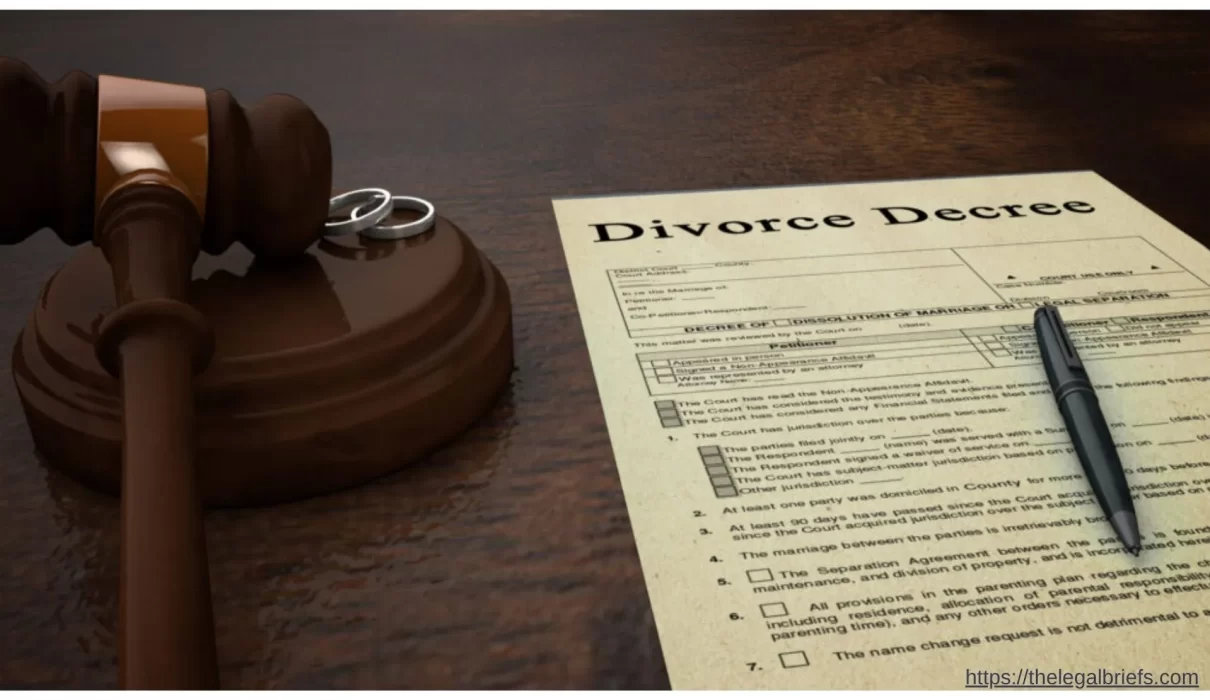
Divorce papers refer to the full set of legal forms required to open, process, and close a divorce case in civil court. The term covers several distinct documents, not just one form, and the exact list depends on whether the divorce is contested, uncontested, or involves children and shared property. At a minimum, divorce papers typically include a petition, a summons, and a final decree, with additional forms layered on depending on the complexity of the case.
Courts treat these documents as formal pleadings, meaning they carry legal weight and must follow strict formatting, service, and filing rules. An error on divorce papers, such as a missing signature, an incorrect case number, or an unnotarized form, can result in the court rejecting the filing and pushing back your case timeline by weeks.
Types of Divorce Papers You May Need
The exact forms required depend on your state and your specific circumstances, but most cases involve some combination of the following documents.
Petition for Divorce
The petition, sometimes called a complaint, is the document that formally asks the court to dissolve the marriage. It identifies both spouses, states the legal grounds for divorce, such as irreconcilable differences or a specific fault ground, and outlines what the filing spouse is requesting regarding property, custody, and support.
Summons
The summons is the document that officially notifies the other spouse that a divorce case has been filed against them. It includes a deadline for the responding spouse to file an answer, usually between twenty and thirty days depending on the state. Proper service of the summons, along with the petition, is what gives the court jurisdiction over both parties.
Financial Affidavit
Most states require a sworn financial disclosure as part of this filing package. This form lists income, debts, assets, and monthly expenses for both spouses and is used by the court to make fair decisions about support and property division.
Parenting Plan and Child Support Worksheet
If the couple has minor children, the filing will also include a proposed parenting plan covering custody and visitation, along with a child support worksheet calculated using the state’s specific formula.
Final Decree of Divorce
This is the document a judge signs to legally end the marriage. It incorporates the terms of any settlement agreement and becomes the enforceable court order going forward.
How to Get Divorce Papers
There are three main ways to obtain divorce papers, and the right one depends on your budget, the complexity of your case, and whether your divorce is contested.
Free Divorce Papers Online
Many state court websites publish free, fillable forms as PDF downloads, particularly for uncontested or simplified divorce cases. These official documents are the safest free option because they are pre-approved by the court and updated when state law changes. Searching for your state’s judicial branch website, rather than a generic third-party site, is the most reliable way to find accurate, current paperwork.
Divorce Papers From the Courthouse
You can also request paper copies directly from the clerk of court in the county where you plan to file. This option is useful if you are not confident navigating a website, or if your county uses templates that differ slightly from the state’s standard forms.
Online Divorce Document Services
Paid services will prepare your filing based on a questionnaire, which can save time for straightforward, uncontested cases. These services do not provide legal advice and are not a substitute for an attorney if your case involves significant assets, contested custody, or domestic conflict.
E-Filing and Electronic Submission
A growing number of counties now accept divorce papers through an electronic filing portal rather than requiring an in-person visit to the courthouse. E-filing systems typically require you to create an account, upload your completed forms as PDF files, and pay the filing fee online by card. While e-filing can save a trip to the courthouse, the underlying accuracy requirements do not change. Clerks reviewing electronic submissions reject incomplete or improperly formatted documents just as often as they reject paper ones, so the same care in preparation still applies.
How to Fill Out Divorce Papers Correctly
Filling out these forms accurately is one of the most common pain points for people representing themselves in a divorce. A few practices reduce the risk of rejection or delay.
Use your full legal name exactly as it appears on your marriage certificate, and keep it consistent across every form. Double check the case number on every page once your case has been assigned one, since mismatched numbers are a frequent cause of clerk rejections. Be precise with dates, particularly the date of marriage and the date of separation, since these figures can affect how property and support are calculated. Have any required signatures notarized before submission if your state requires it, and keep a complete copy of every page you file for your own records.
If you are unsure how a particular section applies to your situation, many courts offer free self-help centers staffed by court facilitators who can clarify procedural questions, though they cannot give legal advice.
What Filing Fees Typically Cost
Court filing fees for a divorce case generally range from under one hundred dollars to several hundred dollars depending on the state and county, with additional charges sometimes applied for service of process, certified copies of the final decree, or mandatory parenting classes. Most jurisdictions offer a fee waiver, sometimes called an in forma pauperis application, for filers who can demonstrate financial hardship. This waiver request is itself a form that must be submitted and approved before the court will proceed without payment, so it should not be treated as automatic.
The table below breaks down total divorce costs by case type, followed by sample state filing fees so you can budget more precisely for your situation.
Average Total Divorce Cost by Case Type (U.S.)
| Case Type | Average Total Cost |
|---|---|
| Uncontested, DIY (no attorney) | $500 – $1,500 |
| Uncontested, with attorney | $2,500 – $5,500 |
| Full-scope divorce (national average) | ~$11,000 – $15,000 |
| Contested, one trial issue | ~$20,000 |
| Contested, two or more trial issues | $23,000+ |
Source: Martindale-Nolo Research divorce cost survey; figures rounded.
Sample State Filing Fees (2026)
| State | Filing Fee | Notes |
|---|---|---|
| California | ~$435 | Varies slightly by county |
| Florida | $408 + $10 summons | Set by Fla. Stat. Section 28.241 |
| New York | $335 | Combined index, RJI, and note of issue fees |
| Georgia | ~$400 | Varies by county |
| Washington | $300 – $400 | Set by individual superior courts |
Source: State judicial branch fee schedules as reported in 2026 state-level cost guides; verify with local clerk before filing.
Where to File Divorce Papers
Divorce papers are filed with the clerk of the family or civil court in the county where you or your spouse meets the state’s residency requirement, which commonly ranges from six weeks to one year depending on the state. After filing, you will typically pay a filing fee, which varies widely by jurisdiction and can sometimes be waived for those who qualify based on income. Once the petition is filed and assigned a case number, the petitioner is generally responsible for formally serving the other spouse, often through a sheriff’s department or a professional process server, so the case can move forward.
Divorce Papers by State: What to Expect
While the core structure of these documents is similar nationwide, several details differ meaningfully from state to state.
Residency requirements range from no minimum in a handful of states to a full year in others, which determines when you are eligible to file. Waiting periods between filing and finalization also vary, with some states finalizing simple cases in as little as thirty days and others requiring several months. Some states are pure no-fault jurisdictions, while others still allow fault-based grounds that can affect how divorce papers are structured and what evidence is required. Because of this variation, it is worth checking your specific state’s judicial website or speaking with a local family law attorney before assuming a process you read about elsewhere will apply to your case.
Common Mistakes to Avoid With Divorce Papers
A number of avoidable errors repeatedly show up in rejected or delayed divorce filings. Submitting your paperwork without the required filing fee or fee waiver request is one of the most common. Failing to properly serve the other spouse, or attempting to serve papers yourself when your state prohibits it, is another frequent issue. Leaving financial disclosure forms incomplete, missing a required notarization, or filing outdated forms pulled from an unofficial website can each push a case back by weeks. Reviewing your state court’s official checklist before submission is the simplest way to avoid these setbacks.
How Long Does It Take to Process Divorce Papers?
Processing time depends heavily on whether the divorce is contested and how busy the local court calendar is. An uncontested divorce with complete, accurate paperwork and no disputes over property or custody can sometimes be finalized within one to three months after the mandatory waiting period. Contested cases involving disputes over assets, custody, or support frequently take six months to over a year, particularly if the matter proceeds to trial. Court backlogs, incomplete filings, and difficulty serving the other spouse are the three factors most likely to extend a timeline beyond initial expectations.
Do You Need a Lawyer to File Divorce Papers?
You are not legally required to hire an attorney to file divorce papers, and many uncontested, low-asset cases are resolved successfully through self-representation or a paid document preparation service. However, an attorney becomes far more valuable when a case involves significant or complex assets, business ownership, contested custody, allegations of abuse, or a spouse who is uncooperative with the process. A short consultation with a family law attorney, even if you ultimately self-file, can help you understand what is at stake before you sign anything.
If you do decide to hire an attorney, rates vary widely by experience level and location, as shown below.
Divorce Attorney Hourly Rates by Experience Level
| Experience Level | Typical Hourly Rate |
|---|---|
| Newer attorney | $100 – $250/hour |
| Mid-level / experienced attorney | $250 – $400/hour |
| Senior attorney, major metro area | $400 – $850/hour |
Source: Clio and DivorceNet attorney rate data, 2026.
What Happens After You File
Once your initial paperwork is filed and the other spouse has been served, the case generally moves through a sequence of predictable stages. The responding spouse has a set window to file an answer, after which the case proceeds either toward a negotiated settlement or toward contested hearings if the spouses cannot agree on terms. Many courts require or strongly encourage mediation before scheduling a trial date, particularly in cases involving children, since mediated settlements tend to resolve faster and at lower cost than litigated outcomes. Once both sides reach an agreement, or a judge rules on contested issues, the court enters a final decree that legally dissolves the marriage and sets out the binding terms going forward.
How This Differs From an Annulment
People sometimes search for divorce forms when what they actually need is an annulment, and the two processes are not interchangeable. An annulment treats the marriage as though it never legally existed, and is only available under narrow circumstances such as fraud, bigamy, or a marriage entered into under duress. A dissolution, by contrast, acknowledges that a valid marriage existed and formally ends it going forward. Courts apply a much stricter standard to annulment requests, and most couples who simply want to end a marriage, regardless of how short it was, will go through the standard dissolution process rather than seeking an annulment. If you are uncertain which applies to your situation, a brief consultation with a family law attorney can clarify which set of forms and which court process actually fits your circumstances before you spend time filling out the wrong paperwork.
Filing divorce papers is a procedural process, but the documents themselves carry lasting legal and financial consequences. Taking the time to obtain the correct forms, fill them out accurately, and follow your state’s specific filing and service rules gives your case the best chance of moving forward without unnecessary delay.
Key Takeaways
- Confirm your state’s official court website for the most current, free divorce papers.
- Identify whether your case is contested or uncontested before choosing how to obtain your forms.
- Double check names, dates, and case numbers on every document before submission.
- Understand your state’s residency and waiting period requirements before filing.
- Consult a family law attorney if your case involves significant assets, custody disputes, or safety concerns.
Frequently Asked Questions
How much do divorce papers cost to file?
Can I get divorce papers for free?
How long does it take to receive a final divorce decree after filing the papers?
What happens if my spouse refuses to sign or respond to divorce papers?
Can I file divorce papers without a lawyer?
Disclaimer: This article is provided for general informational purposes only and does not constitute legal advice. Divorce laws and procedures vary by state and individual circumstance. Consult a licensed attorney in your jurisdiction for guidance specific to your situation.
