

 By
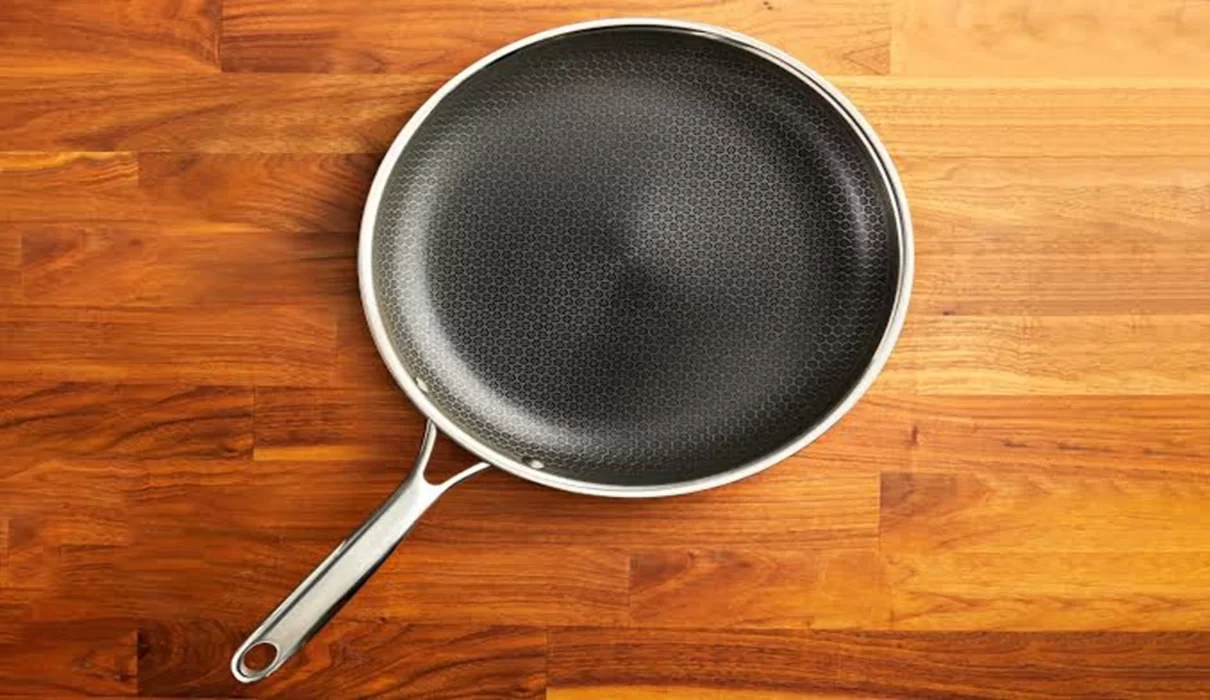
By Cookware brand HexClad has agreed to resolve a major class action lawsuit tied to its marketing claims. The HexClad settlement totals $2.5 million and addresses allegations that the company misled shoppers about the safety of its popular hybrid pots and pans. For business owners in the consumer goods space, this case is a clear signal that marketing language around chemical safety is under close legal scrutiny.
This article breaks down what happened, who is affected, and what the HexClad settlement means for the cookware industry going forward. For a full breakdown of the case history, visit our complete HexClad lawsuit guide.
What Is the HexClad Settlement About?
The HexClad settlement stems from a class action lawsuit filed against One Source to Market, LLC, the parent company behind HexClad Cookware. Plaintiffs alleged that HexClad advertised certain products as “non-toxic,” “PFOA free,” and “PFAS free,” even though the cookware’s non-stick coating contained polytetrafluoroethylene (PTFE), a compound that falls within the broader PFAS chemical family.
The case, formally known as Cliburn et al. v. One Source to Market, LLC, was filed in November 2023 in the Superior Court of California, County of Los Angeles, under case number 23STCV28390. Named plaintiffs included Mandy and Matthew Cliburn, Randi Gurka, Dana Swoyer, Lori Cimonetti, Khushbu Didwania, Pratikkumar Patel, and Benjamin Adams.
HexClad has denied all wrongdoing throughout the case. The company agreed to the settlement to avoid the time, cost, and uncertainty of continued litigation rather than as an admission of fault. This is a common pattern in consumer class actions, the HexClad settlement resolves the dispute without a formal court finding of liability.
How HexClad Built Its Reputation
To understand why the HexClad settlement matters, it helps to understand how the brand became so popular in the first place. HexClad entered the premium cookware market with a distinctive pitch: hybrid stainless steel and non-stick performance in a single pan, backed by a lifetime warranty.
The brand leaned heavily on social media marketing and celebrity endorsements, most notably from chef Gordon Ramsay, to build credibility. Ads promised cookware that was “Non-Toxic, PFAS-Free, Scratch-Proof, Metal-Utensil Safe.” Combined with retail placement at major stores like Costco, HexClad quickly became one of the most recognizable cookware brands in the U.S.
That popularity is part of why the HexClad settlement drew so much attention. A brand built on trust and safety messaging faced direct legal challenges to the accuracy of that messaging.
Why the “Non-Toxic” Label Became a Legal Problem
At the center of the HexClad settlement is a labeling issue that many consumers may not fully understand. PTFE, the coating used on HexClad’s original hybrid pans, is technically part of the PFAS chemical group, often called “forever chemicals” because they don’t break down easily in the environment or the human body.
- HexClad marketed its cookware as “PFAS free” and “non-toxic.”
- The non-stick coating used PTFE, which belongs to the PFAS family.
- Plaintiffs argued this made the marketing claims materially false and misleading.
- HexClad reportedly acknowledged the PTFE coating in private communication with a consumer advocacy group, even while public marketing described the products differently.
This mismatch between advertising and actual product composition formed the legal basis for the lawsuit and, ultimately, the HexClad settlement. The lawsuit brought multiple causes of action, including breach of express and implied warranties, negligent misrepresentation, failure to warn, unjust enrichment, and violations of California’s Consumer Legal Remedies Act, False Advertising Law, and Unfair Competition Law.
It’s worth noting what the lawsuit did not claim. The HexClad settlement was not based on allegations that anyone was directly harmed by using the cookware. Instead, the case focused specifically on whether the marketing language was deceptive, regardless of whether the products caused physical harm under normal use.
Key Terms of the $2.5 Million HexClad Settlement
The HexClad settlement created a $2.5 million fund to compensate eligible consumers. Here are the core details:
- Settlement amount: $2.5 million gross fund
- Eligible purchase window: February 1, 2022, through March 31, 2024
- Eligible products: HexClad Hybrid pans, pots, woks, and bundled sets such as the 13-piece Hybrid Cookware Set, 12-piece Hybrid Perfect Pots & Pans Set, and the 20-piece All-In Bundle
- Payment structure: Pro rata distribution based on the number of valid claims and the amount each consumer spent
- Maximum payout: No claimant could receive more than they actually paid for eligible products
- Claim deadline: November 14, 2025
Because the net fund after legal fees, administrative costs, and service awards came to roughly $1.25 million, and more than 209,000 valid claims were submitted, individual payouts ended up averaging around $6 per claimant. This was far below the initial estimate of roughly $25 per claim, and it drew criticism from consumers who had spent hundreds of dollars on HexClad bundle sets.
If leftover funds remain after the first round of payments — for example, from uncashed checks — a second distribution may occur, provided the additional payment is at least $5 per claimant and doesn’t exceed what that person originally paid.
Court Approval Timeline for the HexClad Settlement
The HexClad settlement moved through several formal legal stages before payments began:
- November 2023: Class action lawsuit filed in Los Angeles Superior Court
- April 2025: Preliminary court approval granted
- August 5, 2025: Deadline for consumers to opt out or object
- September 15, 2025: Final fairness hearing scheduled
- November 14, 2025: Claim form deadline
- March 9, 2026: Final court approval granted
- May 2026: Payments began going out to eligible class members
This multi-step process is standard for class action settlements, giving the court, objectors, and class members time to review the terms before money changes hands. The HexClad settlement followed this typical structure from filing to final payout over roughly two and a half years.
What HexClad Agreed to Change
Beyond the financial payout, the HexClad settlement included an important business practice change. HexClad agreed to stop advertising any product as “non-toxic,” “PFOA free,” or “PFAS free” if that product contains PTFE or any other PFAS-family chemical.
This is arguably the most significant long-term outcome of the case. For business owners and marketers, it reinforces a broader lesson: claims about chemical composition need to be backed by precise, verifiable language. A blanket “non-toxic” label can create legal exposure if the underlying materials don’t fully support that claim.
Several industry observers have noted that competing cookware brands have already begun adjusting their own marketing language, favoring more specific terms like “ceramic non-stick” or “no PTFE” instead of broader safety claims. Some reports indicate HexClad itself has begun transitioning select products toward PTFE-free coatings following the settlement.
Understanding PFAS, PFOA, and PTFE
Part of what makes the HexClad settlement confusing for consumers is the alphabet soup of chemical terms involved. Here’s a simple breakdown:
- PFAS stands for per- and polyfluoroalkyl substances, a broad family of thousands of synthetic chemicals sometimes called “forever chemicals” because of how slowly they break down.
- PFOA is one specific PFAS chemical that has been phased out of many manufacturing processes due to health concerns.
- PTFE is a fluoropolymer used in non-stick coatings, and it falls within the broader PFAS category, even though it functions differently from smaller PFAS molecules like PFOA.
Regulatory agencies generally consider PTFE stable under normal cooking conditions. Concerns arise primarily at very high temperatures, typically above 500°F (260°C), where the coating can begin to degrade. The HexClad settlement did not resolve or determine the underlying scientific safety question, it addressed whether HexClad’s specific marketing claims were legally deceptive.
What This Means for Consumers and Businesses
The HexClad settlement offers lessons for two different audiences.
For consumers, it’s a reminder that terms like “PFOA free” and “PFAS free” are not always interchangeable. A product can be free of one specific chemical while still containing others in the same broader family. Reading labels carefully, and understanding what those labels actually certify, matters more than trusting brand messaging alone.
For business owners, especially those in consumer goods, health, and wellness categories, the case highlights the growing legal risk tied to sweeping safety claims. Regulatory pressure around PFAS chemicals is increasing in states like California and Maine, and the European Union has moved even further with broader restrictions. The HexClad settlement shows that vague or overly broad marketing language can lead directly to costly litigation, reputational damage, and mandated changes to advertising practices.
Companies selling any product marketed as “non-toxic,” “chemical free,” or “safe” should ensure that claim is fully supported by testing and accurate disclosure, not just brand messaging or social media buzz.
Key Takeaways
- The HexClad settlement resolved a class action lawsuit alleging false advertising around “non-toxic” and “PFAS free” cookware claims.
- HexClad agreed to pay $2.5 million without admitting wrongdoing.
- Eligible consumers who purchased qualifying products between February 2022 and March 2024 could file claims through November 14, 2025.
- Final court approval came in March 2026, with payments issued starting in May 2026.
- Individual payouts averaged around $6 per claimant due to the high volume of valid claims.
- HexClad also agreed to change its marketing language going forward, avoiding “non-toxic” or “PFAS free” claims on products containing PTFE.
Final Thoughts
The HexClad settlement is a useful case study in how marketing language and legal liability intersect. While HexClad denied any wrongdoing, the company still agreed to a significant settlement and a lasting change in how it advertises its products. This outcome reflects a broader trend across the cookware and consumer goods industries, where regulators and courts are paying closer attention to chemical safety claims and the specific wording brands use to describe them.
For any business making health or safety claims about its products, the HexClad settlement is a clear example of why precise, accurate language matters, both for consumer trust and long-term legal protection.
FAQ’s
What is the HexClad settlement about?
How much is the HexClad settlement worth?
Who was eligible for the HexClad settlement?
Is the HexClad settlement claim period still open?
How much did claimants receive from the HexClad settlement?
Did the HexClad settlement change how the company markets its products?
Was Gordon Ramsay named in the HexClad lawsuit?
| Disclaimer: This article is for informational purposes only and does not constitute legal advice. Details of the HexClad settlement may be updated as new information becomes available. Readers with questions about eligibility or claims should consult the official settlement documentation or a licensed attorney. |
