

 By
By If you’ve seen “SCOTUS” in a headline, a tweet, or a law school syllabus and wondered what it actually means, you’re not alone. This guide answers exactly what does SCOTUS stand for, where the term comes from, and how it’s used correctly in legal and everyday writing.
Quick Answer
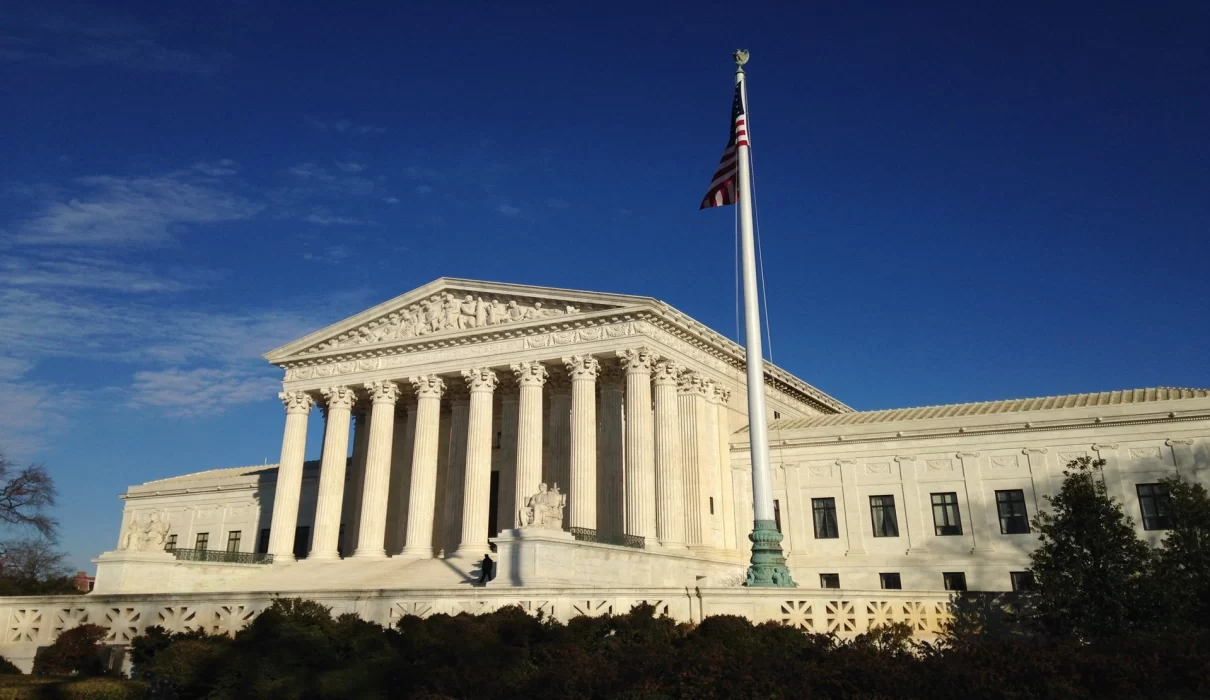
SCOTUS stands for the Supreme Court of the United States. It’s a standard abbreviation used in legal writing, journalism, academic citations, and government communications to refer to the nation’s highest federal court.
Quick Facts Table
| Fact | Detail |
|---|---|
| Full form | Supreme Court of the United States |
| Type of term | Acronym / initialism |
| First widespread legal use | Mid-20th century, popularized in legal citation and court reporting |
| Number of justices | 9 (1 Chief Justice, 8 Associate Justices) |
| Current Chief Justice (2026) | John G. Roberts Jr. |
| Where the Court sits | Washington, D.C. |
| Constitutional basis | Article III, Section 1, U.S. Constitution |
| Similar acronyms | POTUS, FLOTUS, SCOJ, SCOTx |
Key Takeaways
- SCOTUS is an initialism, not a true acronym, since each letter is pronounced individually as part of the phrase, though it is commonly read as one word (“SKOH-tus”).
- It refers specifically to the Supreme Court of the United States, not any state supreme court.
- The term is widely used in legal databases, court reporting, and social media shorthand.
- SCOTUS has 9 justices, a number set by Congress, not the Constitution.
- The Court’s official name never changes; SCOTUS is simply a shorthand people use to refer to it.
What Does SCOTUS Stand For?
SCOTUS stands for the Supreme Court Of The United States. It’s the highest court in the federal judiciary and the final court of appeal for cases involving federal law and the U.S. Constitution.
The abbreviation follows a naming pattern used across U.S. government shorthand, where the first letter of each major word in an official title is combined into a single, easy-to-type term.
SCOTUS Full Form Explained
Breaking down the SCOTUS full form letter by letter:
| Letter | Stands For |
|---|---|
| S | Supreme |
| C | Court |
| O | Of |
| T | The |
| U | United |
| S | States |
This full form appears exactly as written in most legal citation guides, including The Bluebook, which is the standard reference for legal citation in U.S. law schools and courts.
SCOTUS Meaning in Legal and Everyday Use
The SCOTUS meaning is consistent across contexts, but how the term gets used varies:
In legal writing: Attorneys and law students use SCOTUS as shorthand in briefs, memos, and case notes to avoid repeating “the Supreme Court of the United States” throughout a document.
In journalism: News outlets use SCOTUS in headlines because it’s shorter and easier to fit into limited space, especially on social media and mobile alerts.
In casual conversation: People increasingly use SCOTUS the way they’d use POTUS (President of the United States), as a quick, recognizable reference in political and legal discussions.
In academic citation: Law reviews and court databases like Westlaw and LexisNexis often use SCOTUS in case summaries and internal tagging systems.
SCOTUS Acronym: Where It Came From
The SCOTUS acronym follows the same construction pattern as POTUS (President of the United States) and FLOTUS (First Lady of the United States). These abbreviations originated in military and telegraph communications during the 19th and early 20th centuries, when shorter terms saved time and space in official messages.
POTUS is documented in use as early as the 1870s in White House telegraph logs. SCOTUS and FLOTUS followed the same pattern later, gaining traction in the 20th century as legal and political writing needed a similarly compact reference for the Court.
Today, SCOTUS is fully mainstream. It appears in official government transcripts, C-SPAN coverage, and mainstream news coverage without needing an explanation.
SCOTUS Definition According to Legal Sources
According to legal reference standards, the SCOTUS definition is straightforward: it is an abbreviation, not a separate legal entity. SCOTUS and “the Supreme Court of the United States” refer to the exact same institution. There is no legal distinction between the two.
You will not find “SCOTUS” written into the U.S. Constitution or federal statutes. The term is a colloquial and professional shorthand, not the Court’s official name in law.
What Is SCOTUS? Structure and Role
So what is SCOTUS, beyond the abbreviation? It’s the head of the federal judicial branch and one of the three branches of the U.S. government established under Article III of the Constitution.
SCOTUS has two primary types of jurisdiction:
Original jurisdiction: Cases that start directly at the Supreme Court, mainly disputes between states or cases involving foreign ambassadors. These are rare.
Appellate jurisdiction: The vast majority of the Court’s work. SCOTUS reviews decisions from federal circuit courts and, in some cases, state supreme courts, when a case raises a substantial federal or constitutional question.
The Court does not hear every case it’s asked to review. Most cases reach SCOTUS through a writ of certiorari, a formal request asking the Court to review a lower court’s ruling. The Court accepts only a small fraction of the thousands of petitions it receives each term.
How Many Justices Sit on SCOTUS
SCOTUS is made up of nine justices: one Chief Justice and eight Associate Justices. This number is set by federal statute, specifically the Judiciary Act of 1869, not the Constitution itself. Congress has changed the size of the Court six times since 1789 before settling on nine.
Justices hold their positions for life under the Constitution’s “good behavior” clause, meaning they serve until they retire, resign, die in office, or are removed through impeachment. No Supreme Court justice has ever been removed through impeachment.
Current SCOTUS Justices (2026)
| Justice | Role | Year Appointed |
|---|---|---|
| John G. Roberts Jr. | Chief Justice | 2005 |
| Clarence Thomas | Associate Justice | 1991 |
| Samuel A. Alito Jr. | Associate Justice | 2006 |
| Sonia Sotomayor | Associate Justice | 2009 |
| Elena Kagan | Associate Justice | 2010 |
| Neil M. Gorsuch | Associate Justice | 2017 |
| Brett M. Kavanaugh | Associate Justice | 2018 |
| Amy Coney Barrett | Associate Justice | 2020 |
| Ketanji Brown Jackson | Associate Justice | 2022 |
This roster reflects the sitting Court as of mid-2026. Because vacancies and confirmations can happen at any time, readers should confirm current membership through the Court’s official site listed in the sources section below.
How SCOTUS Cases Reach the Court
Understanding this process helps explain why SCOTUS matters so much in the U.S. legal system:
- A case is filed and decided in a federal district court or state trial court.
- The losing party appeals to a federal circuit court of appeals or a state’s highest court.
- A party petitions SCOTUS for review through a writ of certiorari.
- Four of the nine justices must agree to hear the case, a standard known as the “Rule of Four.”
- Oral arguments are held, followed by private conference and a written opinion.
Fewer than 2% of certiorari petitions are typically granted in a given term, which is why a SCOTUS ruling carries so much weight. The Court is selective about which questions it decides to answer.
SCOTUS vs Other Government Acronyms
SCOTUS isn’t the only shorthand of its kind in U.S. government and legal writing. Here’s how it compares:
| Acronym | Full Form | Refers To |
|---|---|---|
| SCOTUS | Supreme Court of the United States | The federal Supreme Court |
| POTUS | President of the United States | The sitting U.S. president |
| FLOTUS | First Lady of the United States | The president’s spouse (traditionally) |
| SCOTX | Supreme Court of Texas | Texas’s highest court |
| SDNY | Southern District of New York | A specific federal district court |
| DOJ | Department of Justice | The federal executive law enforcement agency |
The key distinction to remember: SCOTUS always refers to the federal Supreme Court. State supreme courts use their own separate abbreviations, like SCOTX for Texas or SCONC for North Carolina, and should never be confused with SCOTUS.
Common Mistakes and Misconceptions About SCOTUS
Mistake 1: Assuming SCOTUS is a nickname invented by the media. It’s used in official and academic legal writing too, not just headlines.
Mistake 2: Confusing SCOTUS with a state supreme court. SCOTUS refers exclusively to the federal Supreme Court in Washington, D.C.
Mistake 3: Thinking SCOTUS has a separate legal identity from “the Supreme Court.” They are the same institution; SCOTUS is purely a written shorthand.
Mistake 4: Believing the Court’s size of nine justices is constitutionally fixed. It’s set by Congress and has changed multiple times in U.S. history.
Why This Acronym Matters for Legal Research and Journalism
Knowing the SCOTUS acronym matters beyond trivia. Legal databases, citation systems, and search algorithms treat “SCOTUS” and “Supreme Court of the United States” as related but sometimes separately indexed terms. Understanding both helps when researching case law, tracking legal news, or citing sources correctly in academic or professional writing.
For law students especially, correctly using SCOTUS in citations and case briefs, rather than substituting it for a state court by mistake, is a small detail that reflects real legal literacy.
Latest 2026 Update
As of mid-2026, the sitting Court remains at its full nine-member bench with no vacancies. The Court continues to hear cases across its October 2025-2026 and upcoming October 2026-2027 terms. Because judicial appointments and retirements can occur without long advance notice, readers researching a specific pending case or a justice’s current status should verify against the Court’s official website rather than relying on any single secondary source, including this one.
Conclusion
So, what does SCOTUS stand for? It’s simply the Supreme Court of the United States, written as a compact, widely recognized shorthand used across legal writing, journalism, and everyday political conversation. While the term itself carries no separate legal meaning, understanding where it comes from and how it’s correctly used helps readers navigate legal news, case citations, and government references with more confidence.
Sources and References
- U.S. Constitution, Article III, Section 1
- Supreme Court of the United States, official website (supremecourt.gov), “Current Members” and “About the Court”
- The Bluebook: A Uniform System of Citation
- Federal Judicial Center, judicial salary and history records
- Judiciary Act of 1869 (fixing Court size at nine justices)
FAQ’s
What does SCOTUS stand for?
How do you pronounce SCOTUS?
Is SCOTUS an official legal term?
How many justices are on SCOTUS?
What’s the difference between SCOTUS and POTUS?
Who is the current Chief Justice of SCOTUS?
Disclaimer: This article is for general informational purposes and does not constitute legal advice. For current, case-specific information, consult the Supreme Court’s official website or a licensed attorney.
