

 By
By The Poppi lawsuit is one of the most talked-about consumer protection cases in the beverage industry. What started as a single complaint from a California shopper grew into a multi-million dollar class action that ended with an $8.9 million settlement receiving final court approval on April 14, 2026.
If you are a business owner, marketer, or legal professional, understanding how this lawsuit was built, step by step, can help you recognize the legal risks behind health-related marketing claims.
What Is the Poppi Lawsuit About?
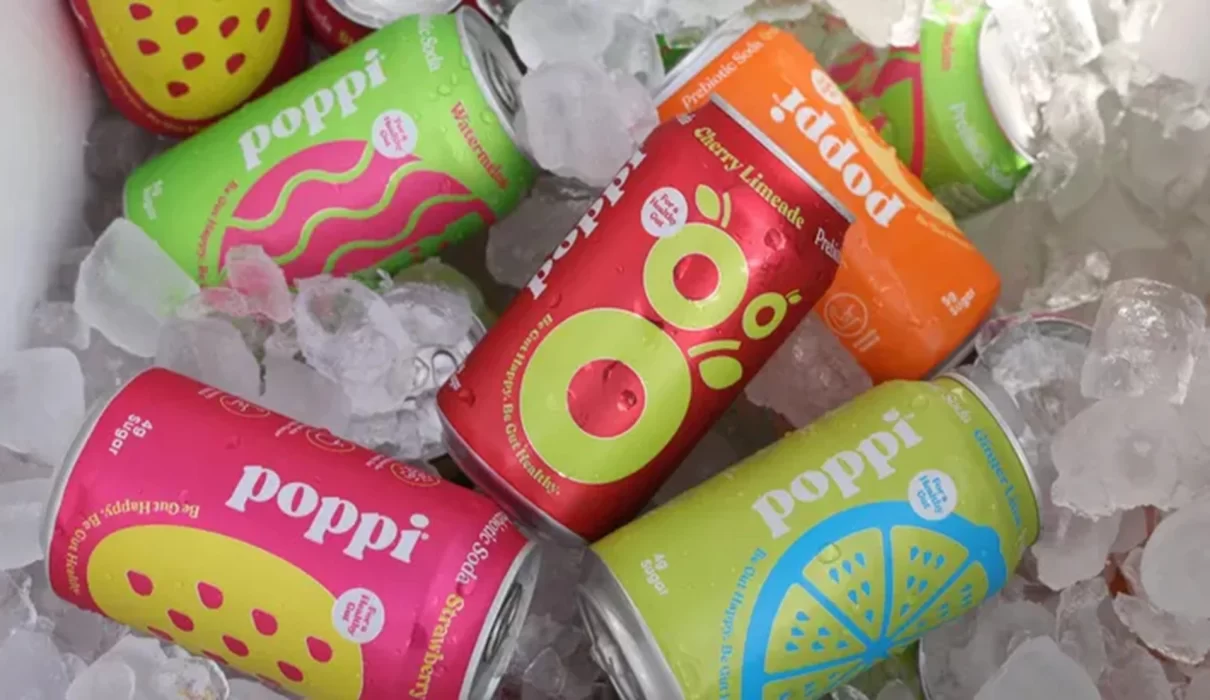
The Poppi lawsuit centers on false advertising. Poppi, a prebiotic soda brand owned by VNGR Beverage LLC, marketed its drinks with the slogan “Be Gut Happy. Be Gut Healthy.” The brand positioned itself as a health-first alternative to traditional sodas.
The problem? Plaintiffs argued the health claims were not backed by science.
Each can of Poppi contains just two grams of prebiotic agave inulin fiber. According to the Poppi lawsuit, that amount is far too low to provide any real digestive or gut health benefit to consumers.
Who Filed the Poppi Lawsuit First?
The first Poppi lawsuit was filed on May 29, 2024, by a California consumer named Kristin Cobbs. She filed the case in the U.S. District Court for the Northern District of California.
Cobbs stated she purchased Poppi sodas in-store and online in March 2024, specifically because of the gut health marketing on the label. After researching the ingredients, she discovered the prebiotic fiber content was far below what would be needed to deliver any meaningful health benefit.
Her core claims in the Poppi lawsuit included:
- The product label was misleading and deceptive
- Two grams of prebiotic fiber per can is scientifically insufficient for gut health
- Consumers would need to drink more than four cans a day to see any possible benefit
- Even then, the sugar content in that many cans would cancel out any health gains
This filing was the spark that ignited the broader Poppi lawsuit.
How Did Multiple Lawsuits Become One?
Shortly after Cobbs filed her complaint, other consumers across California filed their own individual lawsuits making similar claims against Poppi. These included:
- Cobbs v. VNGR Beverage, LLC, Case No. 4:24-cv-03229
- Lesh, et al. v. VNGR Beverage, LLC, Case No. 3:24-cv-03612
- Wheeler v. VNGR Beverage, LLC, filed July 2024
By June 2024, a federal judge consolidated all of these individual cases into a single unified class action formally titled In re VNGR Beverage, LLC Litigation, Case No. 4:24-cv-03229-HSG.
This consolidation is a standard legal process used when multiple plaintiffs raise the same or nearly identical claims against the same defendant. Rather than running separate trials for each case, the court combines them to save time and ensure consistent rulings.
For the Poppi lawsuit, consolidation was critical. It transformed a handful of individual complaints into a powerful, unified class action with far greater legal weight.
“When several consumers file nearly identical claims against the same company, consolidation is not just procedurally efficient. It signals to the defendant that the alleged harm is widespread and that the legal exposure is far greater than a single complaint suggests.” – Consumer Protection Attorney, Northern District of California
Understanding Class Certification in the Poppi Lawsuit
One of the most important steps in any class action is class certification. This is where a court officially decides whether a group of people, referred to as the “class,” can sue together as one unit.
For the Poppi lawsuit to move forward as a class action, the plaintiffs had to demonstrate several legal requirements under Federal Rule of Civil Procedure 23.
Numerosity
There must be enough affected people to make a class action practical. Given that Poppi was sold nationally across retail stores and online platforms, thousands of consumers had purchased the product based on its health marketing. This requirement was easily satisfied. By the time claims closed, over 2 million claims without proof of purchase were filed, along with 38,542 claims with proof of purchase.
Commonality
All class members must share a common legal question. In the Poppi lawsuit, the core question was the same for every consumer: Were the “gut healthy” marketing claims false and misleading?
Typicality
The named plaintiff’s claims must be typical of the class. Kristin Cobbs, like every other class member, purchased Poppi because of the health claims on the label. Her experience represented the experience of millions of other buyers.
Adequacy
The lead plaintiff and their attorneys must adequately represent the entire class. The legal team representing Cobbs had to demonstrate they could fairly and competently protect the interests of all affected consumers in the Poppi lawsuit.
The California Laws Behind the Poppi Lawsuit
The Poppi lawsuit did not rely on just one law. Plaintiffs invoked three powerful California consumer protection statutes to build their case.
California Consumers Legal Remedies Act (CLRA): This law prohibits businesses from using deceptive tactics in consumer transactions. The Poppi lawsuit alleged that labeling drinks as “gut healthy” without scientific support was a direct violation.
California Unfair Competition Law (UCL): This statute broadly bans unlawful, unfair, or fraudulent business practices. The Poppi lawsuit used this law to argue that Poppi’s marketing practices were fundamentally unfair to consumers who paid premium prices for a product that did not deliver its promised benefits.
California Business and Professions Code: This code reinforces consumer protections around advertising standards and product labeling, forming the third pillar of the Poppi lawsuit.
Together, these three laws gave the plaintiffs a strong legal foundation to pursue the Poppi lawsuit all the way to settlement.
“California has some of the strongest consumer protection statutes in the country. When a brand makes a specific health claim on its label, it is essentially making a legal promise. If that promise is not supported by science, it becomes a liability.” – Food and Beverage Law Expert, University of California
Timeline of the Poppi Lawsuit Through 2026
Understanding the full timeline helps put the Poppi lawsuit in context.
- May 2024: Kristin Cobbs files the first lawsuit in the Northern District of California
- June 2024: Multiple lawsuits consolidated into one class action
- July 2024: Wheeler v. VNGR Beverage filed, added to consolidated case
- February 2025: The Poppi lawsuit paused amid settlement discussions
- March 2025: PepsiCo announces a $1.95 billion agreement to acquire Poppi
- May 23, 2025: Settlement receives preliminary court approval
- September 26, 2025: Deadline for consumers to file claims or opt out
- November 20, 2025: Final approval hearing held
- April 14, 2026: The Poppi false advertising class action settlement was granted final court approval
- May to July 2026: Payments expected within 90 days of the April 14, 2026 final approval ruling.
This timeline shows how a single consumer complaint evolved into a landmark legal case resolved at the highest level.
What the $8.9 Million Settlement Means in 2026
As of 2026, the Poppi lawsuit has reached its final chapter. Verita Global LLC is expected to begin processing payments to approved claimants following the April 14, 2026 final ruling, with distribution running between May and July 2026.
All class members are set to receive a minimum of $5, with individual payout amounts subject to pro-rata adjustment depending on the total number of valid claims filed.
Poppi has not admitted any wrongdoing as part of the settlement. However, the size of the settlement and the legal process behind it sends a clear message to brands across the food and beverage industry.
The Poppi case is part of a wider wave of false advertising litigation targeting the functional beverage industry, with consumers filing similar class action lawsuits against brands including Campbell Soup Co., Prime Hydration LLC, Molson Coors, Nestle USA, and Welch Foods.
Key Takeaways for Business Owners
The Poppi lawsuit offers several important lessons for any business that uses health or wellness claims in its marketing.
- Health claims must be supported by credible, peer-reviewed scientific evidence
- Vague or aspirational language like “gut healthy” or “immune boosting” can expose a brand to litigation
- A single consumer complaint can trigger a class action affecting millions of buyers
- California consumer protection laws give plaintiffs powerful tools to challenge misleading labels
- Settling a case does not erase the reputational and financial impact of a lawsuit
If your business uses health-related claims in advertising or on product labels, the Poppi lawsuit is a direct reminder to review your marketing with legal counsel before going to market.
Final Thoughts
The Poppi lawsuit was not built overnight. It grew from one consumer’s question about an ingredient label into a consolidated class action that reshaped how the beverage industry thinks about health marketing.
From the initial filing in May 2024 to final settlement approval in April 2026, every stage of the Poppi lawsuit followed a clear legal path. Filing, consolidation, class certification, preliminary approval, and final ruling each played a role in reaching the $8.9 million outcome.
For business owners and legal professionals, the Poppi lawsuit is a textbook example of how consumer protection law works in real time. Stay informed, review your claims, and consult a qualified attorney to ensure your marketing practices hold up under legal scrutiny.
