

 By
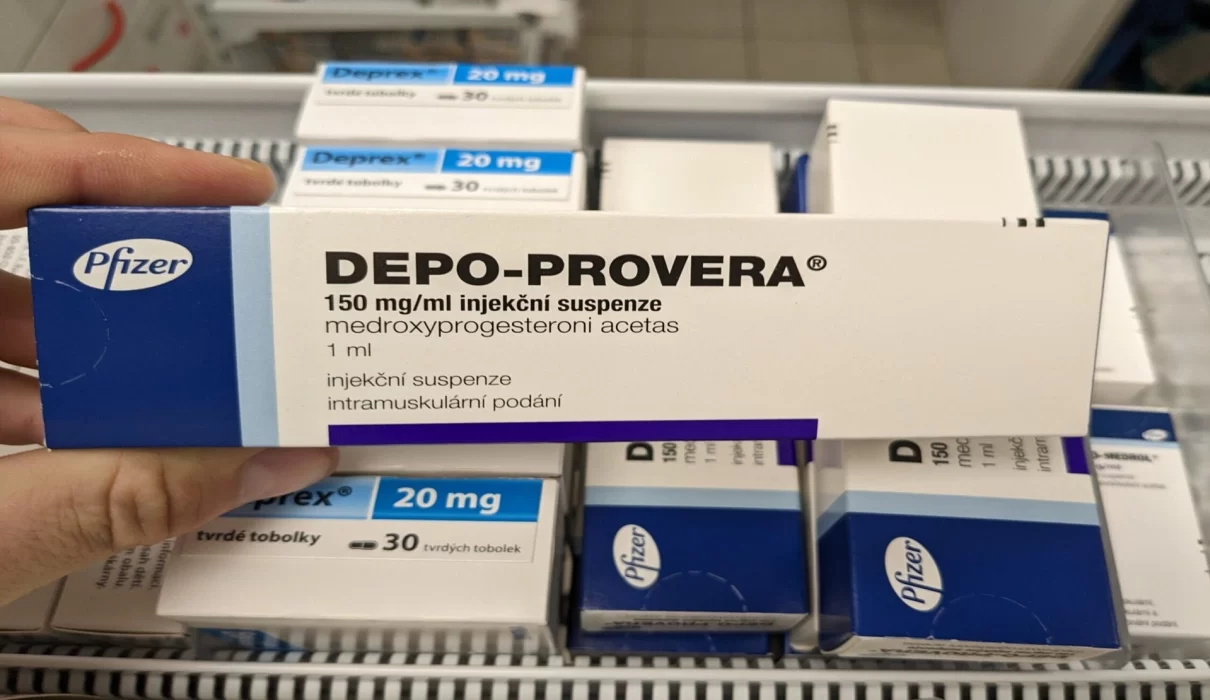
By Depo-Provera lawsuits claim that drugmaker Pfizer failed to adequately warn patients about a heightened risk of meningioma, a type of brain tumor, linked to the birth control injection. As of June 2026, federal court records show more than 5,000 pending cases.
The two sides have now reached a tentative global settlement that could resolve thousands of these claims. Even so, attorneys continue to accept new Depo-Provera cases, and you or someone you love may still qualify. Drugwatch offers a free legal consultation to help you understand your options.
Who Qualifies to File a Depo-Provera Lawsuit
- Diagnosis: You must have an imaging-confirmed cranial or spinal meningioma diagnosed after receiving at least two doses of Depo-Provera, Depo-SubQ Provera, or an FDA-approved generic version.
- Timeline: Claims must be filed within your state’s statute of limitations, which in some cases is as short as one year. Reach out to Drugwatch to find out if you still have time to file.
- Evidence: An attorney can assist you in collecting supporting records such as imaging reports, doctors’ notes, and receipts.
Why Are People Suing Over Depo-Provera?
Plaintiffs are filing a Depo-Provera lawsuit after developing meningiomas they believe are connected to Depo-Provera use. Their core allegation is that Pfizer knew about the elevated risk but failed to properly inform patients and physicians. Some lawsuits also include a design-defect claim, arguing the drug’s formulation makes it capable of causing meningioma.
Pfizer has countered that it couldn’t have changed the label sooner because the FDA rejected its 2024 request to update the warning. The company argues this means federal law preempts the lawsuits entirely. However, in December 2025, the FDA approved a label update addressing meningioma risk, a decision influenced in part by a 2024 study published in The BMJ. That research found women with extended Depo-Provera use faced roughly 5.6 times the odds of developing an intracranial meningioma.
Key Legal Arguments in the Litigation
At the heart of every Depo-Provera lawsuit is a question of timing: what did Pfizer know, and how long did it take to alert patients? Plaintiffs argue that evidence connecting the drug’s active ingredient to meningioma existed well before U.S. patients were ever warned. Notably, regulators in Canada, the EU, and elsewhere issued clearer warnings years ahead of the FDA. The agency’s 2025 decision to mandate a meningioma warning lends support to the claim that American patients should have been informed much sooner.
Pfizer’s position that it lacked FDA authorization to update the label is also being challenged. Federal regulations include a mechanism called “Changes Being Effected” (CBE), which permits drugmakers to add new safety warnings immediately upon discovering a risk, without waiting for the FDA’s formal sign-off.
If plaintiffs can demonstrate Pfizer had risk evidence in hand but failed to act, it could significantly undercut the company’s legal defense. For patients, the central issue is whether critical safety information was withheld or delayed, potentially compromising their ability to make informed health decisions.
Where the Litigation Stands Now
Federal cases have been consolidated into MDL No. 3140, overseen by Judge M. Casey Rodgers in the Northern District of Florida. The mass tort has expanded rapidly, over 1,700 new lawsuits were filed within just a few weeks, pushing the total to 5,590 cases and placing it among the ten largest active litigations in the country.
Given that attorneys are still onboarding new clients, the case count is expected to keep climbing. A hearing originally set for June has been rescheduled to July 27, following the announcement of the proposed global settlement.
Depo-Provera Litigation Timeline
March 2024 – Study Links Depo Shot to Meningioma A BMJ study revealed that women using the Depo shot had a 5.6-fold higher likelihood of developing meningioma.
October 2024 – First Lawsuits Filed Women began filing the earliest claims seeking compensation for meningiomas allegedly tied to Depo-Provera use.
February 2025 – MDL No. 3140 Created The Judicial Panel on Multidistrict Litigation consolidated federal cases to streamline the pretrial process.
December 2025 – Label Updated The FDA approved a revised label warning users about meningioma risk.
June 2026 – Settlement Announced Pfizer and plaintiffs’ attorneys reached a tentative global agreement aimed at resolving the litigation.
For a more detailed look at how the case has evolved, visit our full Depo-Provera lawsuit litigation timeline. With a settlement now moving toward finalization, you can request a free case review through Drugwatch to check your eligibility for compensation.
Settlement and Compensation Details
In June 2026, both parties reached a preliminary agreement on a global Depo-Provera lawsuit settlement, a major turning point that could resolve a large share of the pending litigation. The deal is not yet finalized.
The first bellwether trial, originally slated for December 2026, has been pulled from the court calendar in light of the settlement news. No specifics have been disclosed yet regarding payout amounts or how many claimants will qualify.
The presiding judge is permitting certain procedural aspects of the case to move forward while settlement terms are ironed out, since the agreement isn’t expected to cover every federal claim filed.
While details remain limited, several factors are likely to influence individual settlement amounts, including:
- Severity of the meningioma diagnosis
- Whether surgery was required
- Length and dosage of Depo-Provera use
- Plaintiff’s age at diagnosis
- Medical expenses incurred
- Lost income
- Overall impact on quality of life
Claimants with the most serious health outcomes and strongest supporting evidence are likely to see the highest payouts.
Understanding the Injuries Behind These Lawsuits
The central injury at issue in every Depo-Provera lawsuit is meningioma, a tumor that develops in the meninges, the protective layers of tissue surrounding the brain and spinal cord.
Although meningiomas don’t originate within brain tissue itself, they’re typically classified as brain or spinal tumors depending on their location. They tend to grow slowly and may remain symptom-free for years, but can cause significant complications once they reach a certain size.
Symptoms cited in lawsuits include seizures, dizziness, weakness, speech difficulties, ear itching, headaches, lightheadedness, blurred vision, and in severe cases, death.
The 2024 BMJ study was among the first to establish a connection between Depo-Provera and meningioma, finding users could face up to five times the typical risk.
Despite the FDA’s December 2025 label update, Pfizer maintains that Depo-Provera is safe. Plaintiffs argue the revised label actually bolsters their case, both by reinforcing the link to meningioma and by demonstrating a warning could have been issued earlier.
Stories From Women Who Have Filed
T.C. received Depo-Provera injections for three years before being diagnosed with a meningioma. She describes living with constant anxiety about whether the tumor will grow. “I was told how great Depo-Provera was, and I thought it would be more reliable and convenient since I wouldn’t have to take it daily,” she explained. “I had no idea it would lead to such serious health problems.” After hearing about others pursuing legal action, she had her case evaluated and filed her own Depo-Provera lawsuit, hoping to hold the manufacturer accountable.
Edie R. began using Depo-Provera decades ago to manage uterine scar tissue. She went on to experience meningioma symptoms, including persistent seizures. Although she underwent a craniotomy to remove the tumor, most of her other symptoms worsened afterward. “I had to quit my job. I couldn’t do it anymore,” she said. “The financial devastation has been enormous in lost earnings.”
Thousands of women nationwide are pursuing a Depo-Provera lawsuit of their own. While litigation can’t reverse the physical, emotional, and financial toll of a meningioma diagnosis, these cases may help recover losses and push for broader change.
How to File a Depo-Provera Lawsuit
The process starts with a free case evaluation through Drugwatch. We’ll ask about your history with Depo-Provera and your meningioma diagnosis, then walk you through your legal options. Whether you qualify depends on specific criteria that only an attorney can fully assess.
Eligibility can also hinge on how much time has passed since your diagnosis, since filing deadlines vary by state. Our legal partners can help you gather the documentation needed to support your claim.
Steps to Determine If You Have a Case
- Get a Medical Diagnosis – Establish a documented connection between the drug and your health condition.
- Consult a Lawyer – Speak with a product liability attorney to evaluate your case and review your options.
- Gather Documentation – Collect prescriptions, treatment records, and other medical documentation to back your claim.
| “If you’ve been diagnosed with a meningioma after using Depo-Provera or Depo-SubQ Provera or their generic equivalents, you may qualify for a lawsuit” – said attorney Brendan Smith, a partner in the Complex Litigation Department at Simmons Hanly Conroy. |
Expert and Patient Perspectives on Depo-Provera
Drugwatch Analysis (June 2026)
Pfizer’s central defense in this litigation boils down to one argument: it wanted to add a warning, but the FDA initially blocked it. Here’s how that plays out.
In early 2024, Pfizer says it petitioned the FDA to add a meningioma warning to Depo-Provera’s label, and the agency declined at that time. The company’s reasoning: if the FDA denied the request, how can it be held liable for not warning patients?
This is known as a preemption defense, the argument that a federal agency’s decision overrides any state-level claim alleging Pfizer should have warned consumers sooner. It was arguably Pfizer’s strongest card, and it might have succeeded.
That changed in December 2025, when the FDA approved a meningioma warning for the drug. That reversal undercut Pfizer’s defense significantly, since it demonstrated the warning was achievable all along, making it harder to argue the change was impossible when the FDA itself just approved it.
Plaintiffs further note that FDA regulations already permit drugmakers to add safety warnings independently, without prior approval, as soon as new risk data surfaces. That suggests Pfizer may have had both the ability and the obligation to warn patients much earlier.
Regulators in Canada and the EU added meningioma warnings years before the U.S. did in 2025. That gap in timing is precisely what plaintiffs hoped a jury would scrutinize, and it may be a key reason Pfizer chose to pursue a settlement instead.
Conclusion
The Depo-Provera lawsuit litigation has moved quickly from a handful of initial filings to one of the largest mass torts in the country, and the recent settlement announcement marks a significant turning point. While many questions remain about payout amounts and which cases will ultimately be covered, the FDA’s 2025 label update has strengthened the position of women who say they were never properly warned about meningioma risk.
If you or a loved one developed a meningioma after using Depo-Provera, Depo-SubQ Provera, or a generic equivalent, it’s worth speaking with an attorney soon, since filing deadlines vary by state and a settlement won’t necessarily resolve every claim. A free case review through Drugwatch can help you understand whether you qualify and what your next steps should be.
Key Takeaways
- Depo-Provera lawsuit allege Pfizer failed to warn users about an increased risk of meningioma, a type of brain tumor, linked to long-term use of the birth control injection.
- More than 5,000 cases are currently pending in federal court as part of MDL No. 3140, making it one of the largest mass torts in the U.S.
- A 2024 study published in The BMJ found women with long-term Depo-Provera use had 5.6 times greater odds of developing an intracranial meningioma.
- The FDA approved a label update warning of meningioma risk in December 2025, undermining Pfizer’s argument that it couldn’t have warned patients sooner.
- In June 2026, Pfizer and plaintiffs’ attorneys reached a tentative global settlement, though terms and payout details haven’t been finalized.
- Attorneys are still accepting new cases, but filing deadlines vary by state and may be as short as one year from diagnosis.
- You may qualify if you were diagnosed with a cranial or spinal meningioma after at least two doses of Depo-Provera, Depo-SubQ Provera, or an approved generic.
FAQ’s
Is there a Depo-Provera class action lawsuit?
What is the statute of limitations for Depo-Provera lawsuits?
Who qualifies for the Depo-Provera lawsuit?
| Note: Please seek the advice of a medical professional before making health care decisions. Thoughts and opinions expressed in personal stories are strictly anecdotal and should not be taken as medical information or advice. |
