

 By
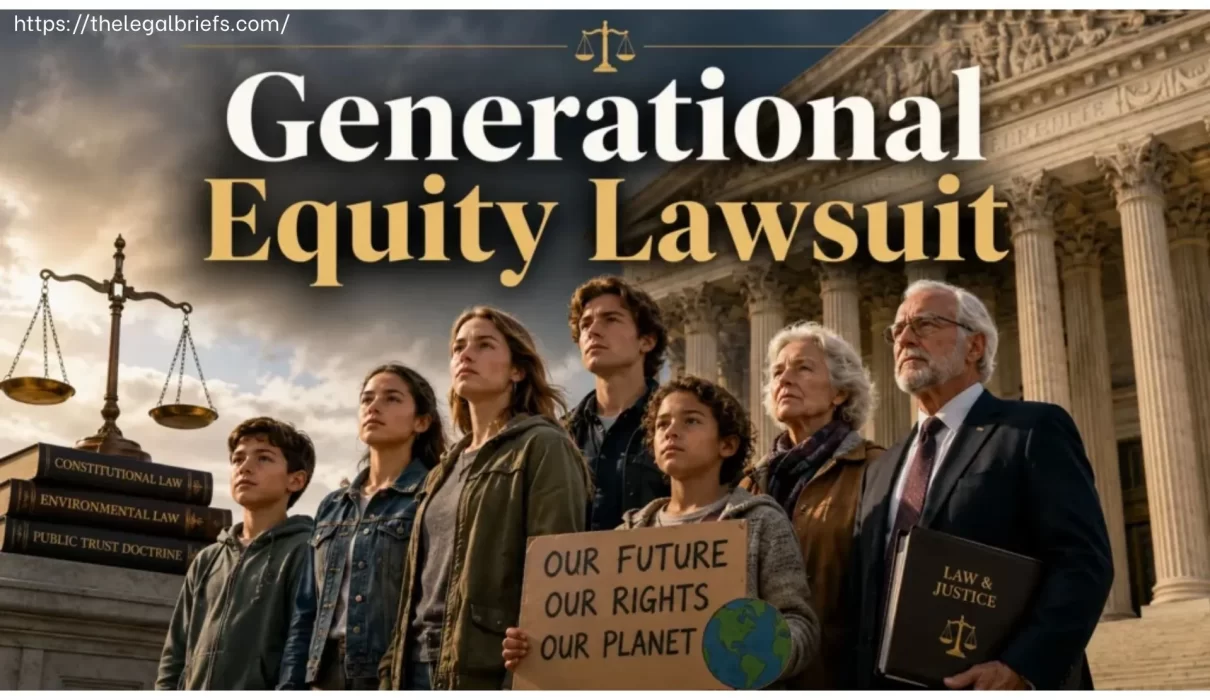
By A generational equity lawsuit is one of the most consequential and fastest-growing categories of legal dispute in the United States. Whether it arises inside a family over a disputed will, within a trust where a trustee mismanaged assets for decades, or in a public courtroom where young plaintiffs challenge government climate policy, a generational equity lawsuit asks the same fundamental question: are the wealth, resources, and opportunities of society being distributed fairly across age groups?
The answer to that question is increasingly being contested in court. With the largest intergenerational wealth transfer in American history now underway, as Baby Boomers age and pass on an estimated $84 trillion in assets over the next two decades, generational equity lawsuits will only become more common, more complex, and more consequential for families and policymakers alike.
This guide covers everything you need to know about the generational equity lawsuit: what it is, why it happens, how courts evaluate claims, landmark cases that have shaped the law, and practical strategies to prevent a dispute before it reaches a courtroom.
What Is a Generational Equity Lawsuit?
A generational equity lawsuit is a legal action in which the central dispute involves the fair distribution of wealth, resources, or responsibilities between different generations. The term generational equity refers to the principle that each generation has both the right to benefit from inherited wealth and the responsibility not to consume so much that future generations are left without adequate resources or opportunity.
In the family context, a generational equity lawsuit most commonly arises when heirs, beneficiaries, or family members believe that an estate has been distributed unfairly, that a trustee has breached their fiduciary duty, or that a will was executed under circumstances that did not reflect the true wishes of the deceased. In the public context, a generational equity lawsuit may challenge pension systems, environmental regulations, national debt policies, or any government action that imposes disproportionate burdens on younger or future generations.
What distinguishes a generational equity lawsuit from an ordinary estate dispute or breach-of-contract claim is its framing. A generational equity lawsuit explicitly centers the concept of fairness between age groups as the legal and moral foundation of the claim, making it both a legal argument and a social one.
Origins and History of the Generational Equity Lawsuit
Disputes over inherited wealth are not new, but the modern generational equity lawsuit has its roots in two parallel developments: the rise of complex trust structures in American family law, and growing public awareness of intergenerational financial imbalance.
In earlier centuries, conflicts centered on real property and titled estates. By the mid-20th century, American families were managing diversified portfolios, retirement accounts, and multi-entity trusts, creating far more opportunities for disagreement. Courts developed doctrines of trustee fiduciary duty, equitable distribution, and cy-pres modification partly in response to this complexity.
At the same time, researchers began documenting widening wealth gaps between generations. Baby Boomers who entered the housing market in the 1970s and 1980s accumulated substantial home equity, while Millennials and Gen Z faced median home prices that, adjusted for income, were two to three times higher. This economic backdrop gave the generational equity lawsuit new moral urgency: it was no longer simply about a disputed will, but about systemic unfairness.
Why Generational Equity Lawsuits Are Rising
Several structural forces are driving the increase in generational equity lawsuits across the United States.
The Great Wealth Transfer
The transfer of wealth from Baby Boomers to Millennials and Generation Z is the largest in recorded history. Estimates suggest that approximately $84 trillion will change hands by 2045. The complexity of modern estates, which often include retirement accounts, real estate portfolios, business interests, and multi-entity trusts, creates far more opportunities for misunderstanding, mismanagement, and outright dispute than simpler estates of earlier generations. Every dollar at stake increases the likelihood of a generational equity lawsuit.
Rising Intergenerational Economic Inequality
Multiple studies have documented a widening gap between the economic circumstances of older and younger Americans. Baby Boomers who entered the housing market in the 1970s and 1980s paid median home prices that, adjusted for income, were roughly three times lower than those faced by Millennials today. Retirement savings rates, pension coverage, and job security have all declined for younger workers. This economic backdrop gives the generational equity lawsuit a social urgency that extends well beyond any individual estate dispute.
Youth Climate Litigation
Perhaps the most visible driver of generational equity lawsuit filings in recent years has been climate change. Following the landmark ruling in Held v. Montana in 2023, where a group of young plaintiffs successfully argued that Montana’s fossil-fuel energy policy violated their constitutional right to a clean environment, lawsuits challenging government inaction on climate grounds have proliferated across state and federal courts. These cases frame climate harm explicitly as a generational equity lawsuit, arguing that current generations are consuming an environmental inheritance that belongs equally to those who come after.
The Three Core Principles Behind Generational Equity Lawsuits
Three foundational principles guide courts and commentators when evaluating a generational equity lawsuit.
Fair allocation of resources holds that each generation is entitled to a proportionate share of available wealth and opportunity. In the estate-planning context, this means that testamentary documents should clearly state the rationale for any unequal distribution. Courts often scrutinize ambiguous language and may reapportion assets when a generational equity lawsuit demonstrates that the deceased’s true intent was equal treatment.
Sustainability for future generations requires that wealth and resources be managed in a way that preserves them over time. A trustee who liquidates trust assets to fund speculative investments, or a government that accumulates unsustainable public debt, may face a generational equity lawsuit grounded in the argument that present consumption is being prioritized over future welfare.
Accountability of current decision-makers is the third principle. Executors, trustees, legislators, and corporate boards all owe a duty of transparency and responsible stewardship. When they act in ways that concentrate benefits in the present at the expense of the future, a generational equity lawsuit can hold them legally responsible.
1. Fair Allocation of Resources
The first principle holds that each generation is entitled to a proportionate share of available wealth and opportunity. In the estate-planning context, this means that testamentary documents should reflect the genuine intent of the deceased and distribute assets in a way that all heirs can understand as rational and fair. Courts adjudicating a generational equity lawsuit over inheritance typically scrutinize the language of wills and trust agreements, the circumstances of their execution, and any evidence of undue influence, lack of capacity, or fraud.
When a generational equity lawsuit demonstrates that a distribution was arbitrary, coerced, or contrary to the deceased’s established pattern of behavior, courts are empowered to redistribute assets, reform trusts, or void amendments executed under questionable circumstances.
2. Sustainability for Future Generations
The second principle requires that wealth and resources be managed in a way that preserves them across time. In the trust context, this translates into the Uniform Trust Code’s prudent investor standard, which obligates trustees to manage assets with an eye toward both current beneficiaries and remainder beneficiaries who will inherit in the future. A trustee who invests recklessly, pays excessive fees, or makes distributions that deplete principal without authorization may face a generational equity lawsuit under this principle.
In the public policy context, sustainability arguments have been made in generational equity lawsuits challenging pension systems that are actuarially insolvent, environmental regulations that permit the depletion of natural resources, and deficit spending that imposes future tax burdens on generations that had no voice in the spending decisions.
3. Accountability of Current Decision-Makers
The third principle holds that those who make decisions affecting future generations, whether as executors, trustees, legislators, or corporate boards, must be transparent and legally accountable for the consequences of those decisions. When accountability fails, a generational equity lawsuit becomes the mechanism through which future-oriented interests are vindicated.
In Felt v. Felt, a 2020 Connecticut case, beneficiaries of a multigenerational family trust successfully sued a corporate trustee for decades of excessive fees and imprudent investment decisions. The court awarded surcharge damages covering the lost value of the trust, a direct application of the accountability principle in a generational equity lawsuit.
Landmark Generational Equity Lawsuits: A Comparison
The following cases represent the most significant generational equity lawsuits in U.S. legal history. Each shaped the doctrine in a distinct way.
| Year | Case | Key Issue | Outcome |
| 1990 | Hodel v. Irving | Native American land inheritance rights stripped by statute | Plaintiff win — heir property rights restored |
| 2015 | Juliana v. United States | Youth plaintiffs: federal fossil-fuel policy violates climate rights | Ongoing — standing contested |
| 2018 | Estate of Flores (CA) | Trust amendment on deathbed; undue influence by surviving spouse | Plaintiff win — trust redistributed |
| 2020 | Felt v. Felt (CT) | Corporate trustee: excessive fees, imprudent investments over decades | Plaintiff win — trustee surcharged |
| 2023 | Held v. Montana | State fossil-fuel policy violates youth constitutional right to clean environment | Historic plaintiff win — policy struck |
| 2024+ | Post-Held wave | Youth climate suits filed in Hawaii, Utah, Virginia | Active — pending |
The pattern across these cases is clear: courts are increasingly willing to engage with generational equity arguments, both in estate law and in constitutional litigation, provided that plaintiffs can demonstrate concrete harm and satisfy the threshold requirements of standing.
Generational Wealth and the Generational Equity Lawsuit
Generational wealth, broadly defined as assets passed from one generation to the next sufficient to alter the financial trajectory of heirs, is both a goal and a source of conflict. Families that accumulate meaningful assets, whether a paid-off home, a business, a stock portfolio, or a funded trust, often discover that the question of how to distribute them is far more contentious than the question of how to build them.
A generational equity lawsuit involving family wealth typically unfolds in one of three patterns. In the first, heirs dispute the validity of a will, arguing undue influence, lack of testamentary capacity, or fraud. In the second, beneficiaries challenge a trustee’s management decisions, seeking removal, surcharge, or reformation of the trust. In the third, an heir who was excluded entirely, perhaps a child from a prior marriage or an estranged relative, files a generational equity lawsuit seeking to establish a legal claim.
The financial stakes can be enormous. Estates worth hundreds of thousands or even millions of dollars can be consumed by litigation costs if a generational equity lawsuit is not resolved early through mediation or negotiated settlement.
How the Legal Process Works in a Generational Equity Lawsuit
A generational equity lawsuit follows a recognizable procedural path, though the timeline and complexity vary significantly depending on whether the dispute is a family estate matter or a large-scale public interest case.
Step 1: Identifying the Triggering Event
A generational equity lawsuit begins with a triggering event: the death of a family member and the reading of a will that heirs find surprising or unfair; a trustee’s distribution decision that beneficiaries believe was improper; or a government policy that youth advocates argue will impose measurable harm on younger Americans. The triggering event defines the scope of the generational equity lawsuit and determines which legal theories are available to the plaintiff.
Step 2: Establishing Legal Standing
Before a generational equity lawsuit can proceed, the plaintiff must establish legal standing. In estate and trust disputes, standing is typically straightforward: heirs, named beneficiaries, and creditors of the estate all have recognized interests that courts will hear. In policy-based generational equity lawsuits, standing is harder to establish. Plaintiffs must show concrete, particularized harm, causation by the defendant’s conduct, and redressability through a favorable court ruling. The difficulty of establishing standing has led to the dismissal of several high-profile generational equity lawsuits, including early rounds of Juliana v. United States.
Step 3: Discovery and Evidence
The discovery phase of a generational equity lawsuit involves the collection of evidence through depositions, interrogatories, document requests, and expert witness reports. In estate disputes, key documents include the original will, any amendments or codicils, trust agreements, financial statements, and correspondence from the deceased. Medical records may be relevant to questions of testamentary capacity. In policy cases, discovery may involve agency records, scientific reports, and actuarial analyses.
Expert witnesses play a central role in many generational equity lawsuits. Forensic accountants testify about trust mismanagement. Estate litigation specialists testify about industry standards for trustee conduct. Climate scientists and economists testify about the projected costs of inaction on environmental plaintiffs’ future wellbeing.
Step 4: Settlement or Trial
Many generational equity lawsuits settle before trial. Settlement is often preferable to litigation because it preserves family relationships, avoids the cost and uncertainty of a trial, and can be structured to address the interests of all parties. Mediation is increasingly required by courts before a generational equity lawsuit proceeds to trial.
When settlement is not possible, a generational equity lawsuit proceeds to trial. In estate disputes, courts may order the redistribution of assets, the removal and replacement of a trustee, surcharge damages against a trustee who breached their fiduciary duty, or the reformation of a trust to reflect the deceased’s true intent. In policy cases, courts may issue injunctions, require agencies to revise their programs, or award monetary compensation.
Generational Wealth and Its Role in Driving Generational Equity Lawsuits
Generational wealth, broadly defined as assets sufficient to meaningfully alter the financial trajectory of the next generation, is both the goal of intergenerational planning and the source of the disputes that fuel generational equity lawsuits. The more significant the estate, the higher the stakes, and the more likely it is that a generational equity lawsuit will follow any perceived unfairness in distribution.
Families with generational wealth face specific risks that make proactive planning essential. First, the complexity of large estates, including business interests, real property, retirement accounts, and trusts, creates more opportunities for misunderstanding among heirs. Second, the emotional weight of inherited family wealth often amplifies conflicts that might otherwise be resolved informally. Third, the involvement of professional fiduciaries, such as corporate trustees or estate administrators, introduces an institutional actor whose conduct can itself become the subject of a generational equity lawsuit.
Families that successfully transmit generational wealth without triggering a generational equity lawsuit share several characteristics: they use clearly drafted estate documents, they communicate openly with heirs about the rationale for distribution decisions, and they appoint trustees who are both technically competent and personally trusted by the beneficiary family.
How to Prevent a Generational Equity Lawsuit
The most effective response to the risk of a generational equity lawsuit is prevention. The following strategies, implemented before a dispute arises, significantly reduce the likelihood that a family’s wealth transfer will end up in litigation.
Consult qualified estate planning attorneys. Professional legal review of estate documents, particularly in states with complex trust laws, is the most cost-effective investment any family with significant assets can make to reduce the risk of a generational equity lawsuit.
Draft clear, specific estate documents. Wills and trust agreements should explain the rationale for any unequal distribution in clear, unambiguous language. Ambiguity is the single greatest driver of generational equity lawsuits in the estate context.
Update documents regularly. Estate plans should be reviewed every three to five years and immediately after any major life event, including marriage, divorce, the birth of a child, a significant change in assets, or the death of a named beneficiary or trustee.
Appoint independent professional trustees. When family dynamics make it likely that a trustee’s decisions will be contested, an independent corporate trustee provides both expertise and neutrality. The additional cost of professional trustee services is almost always lower than the cost of defending a generational equity lawsuit.
Maintain transparent trustee communication. Trustees who provide annual accountings, explain investment decisions, and respond promptly and fully to beneficiary inquiries significantly reduce the risk of a generational equity lawsuit grounded in allegations of concealment or self-dealing.
Engage in proactive family governance. Structured beneficiary meetings, family councils, and formally documented distribution policies surface disagreements early, when they can be resolved without litigation.
Conclusion
A generational equity lawsuit reflects a tension that runs through every aspect of modern society: the conflict between the present and the future, between those who hold resources today and those who will need them tomorrow. Whether the dispute arises within a family trust, an estate contested by siblings, or a courthouse where young plaintiffs challenge their government’s environmental record, the generational equity lawsuit has become one of the defining legal instruments of the 21st century.
The principles of fair allocation, sustainability, and accountability provide courts with a framework for resolving these disputes in ways that honor both the legitimate expectations of current generations and the rights of those who come after. For families and institutions alike, understanding the legal architecture of the generational equity lawsuit is not merely academic. It is a practical tool for protecting wealth, preserving relationships, and building a legacy that will endure across generations.
