

 By
By The Pennsylvania Supreme Court has unanimously ruled that, in most circumstances, the state constitution requires officials to obtain a warrant before searching privately marked land. By rejecting the federal “open fields doctrine” in favor of Pennsylvania’s broader constitutional privacy protections, the court has issued a landmark decision.
Joshua Windham serves as a senior attorney at the Institute for Justice (IJ) and co-director of IJ’s Project on the Fourth Amendment. He represented the plaintiffs in Punxsutawney Hunting Club v. Pennsylvania Game Commission and also represents plaintiffs in the related constitutional cases currently pending in Alabama and Louisiana.
In a unanimous decision, the Pennsylvania Supreme Court ruled that the state constitution generally requires a warrant before officials may search privately marked property. This marks the first time in more than three decades that a state high court has rejected the federal “open fields doctrine,” creating a potential roadmap for other state supreme courts considering similar legal challenges.
The case, Punxsutawney Hunting Club v. Pennsylvania Game Commission, challenged a state law that authorized game wardens statutory authority to “enter any private property, posted or otherwise, outside of buildings” without a warrant. Over several years, a game warden repeatedly entered two private hunting clubs without judicial approval, searched the properties for possible hunting violations, and even installed a surveillance camera that remained in place for 78 days.
The hunting clubs filed suit in 2021 in an effort to stop these warrantless entries. However, they faced two major legal hurdles: the federal Fourth Amendment’s open fields doctrine and a 2007 Pennsylvania Supreme Court decision that had adopted the same doctrine under Article I, Section 8 of the Pennsylvania Constitution.
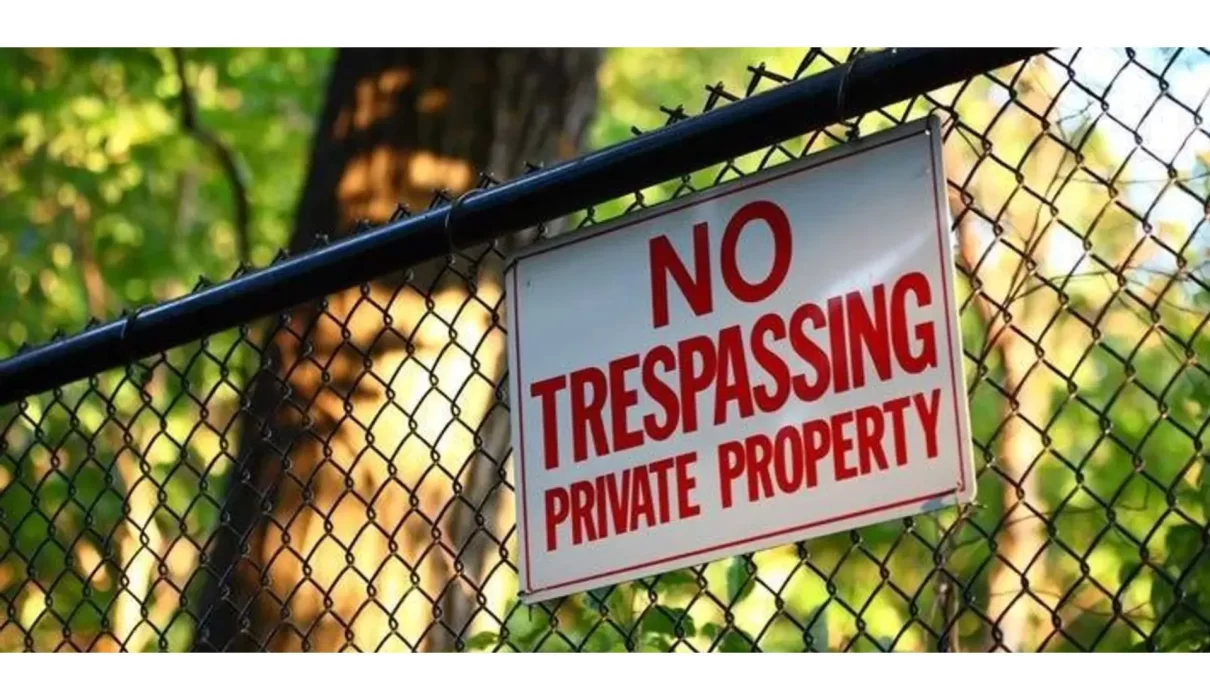
For well over a century, the U.S. Supreme Court has interpreted the Fourth Amendment’s protection of “persons, houses, papers, and effects” as excluding land located beyond the immediate area surrounding a home, commonly known as the “curtilage.” The Court has also concluded that, although the Fourth Amendment safeguards reasonable expectations of privacy beyond its express wording, individuals cannot reasonably expect privacy on their own land, even if it is fenced or marked with “No Trespassing” signs. As a result, the open fields doctrine permits warrantless searches across an estimated 96 percent of privately owned land in the United States.
Although several state supreme courts have rejected the open fields doctrine under their own constitutions, the last state high court to do so was the Montana Supreme Court in 1995. Until this ruling, Pennsylvania appeared committed to the federal approach. In Commonwealth v. Russo (2007), the Pennsylvania Supreme Court held that Article I, Section 8 did not extend constitutional protection to open fields, concluding that state and federal law were coextensive in this area.
In Punxsutawney, the Court unanimously overturned Russo and rejected the open fields doctrine under Article I, Section 8. Unlike the Fourth Amendment, Pennsylvania’s constitutional provision expressly protects “possessions.” The Court found this distinction significant, explaining that historical dictionaries, statutes, and judicial decisions from the founding era demonstrated that the original meaning of “possessions” included privately owned land, whereas the Fourth Amendment’s reference to “effects” did not.
The Court further concluded that Pennsylvania’s historical background supported the expectation of privacy on privately marked land. It observed that early Pennsylvanians strongly opposed arbitrary property searches conducted by British customs officials and embraced English common-law principles recognizing unauthorized entry onto private land as trespass. Against this historical backdrop, the justices found no reason to believe the framers intended to exclude improved, enclosed, or clearly posted open land from constitutional protection against unreasonable searches.
According to the current Court, the Russo decision failed in both respects. It did not adequately examine the constitutional significance of the word “possessions,” nor did it properly consider Pennsylvania’s longstanding opposition to arbitrary searches and its strong recognition of landowners’ rights to exclude trespassers. For these reasons, along with the extensive legal analysis contained in the Court’s 83-page opinion, the justices unanimously overruled Russo.
The Court then addressed whether the statutes allowing game wardens to enter private land without a warrant could remain valid. With Russo no longer controlling, the answer was straightforward. The justices held that Article I, Section 8 protects land beyond the curtilage whenever a landowner has demonstrated a legitimate expectation of privacy by taking reasonable steps to keep others out. As a result, government officials must either obtain a warrant supported by probable cause or establish that a recognized exception to the warrant requirement applies before entering such property. Because the challenged statutes authorized warrantless entry in situations where the constitution did not permit it, the Court declared those laws unconstitutional.
The Punxsutawney decision will have both immediate and lasting consequences. In the short term, significantly more private land in Pennsylvania will now receive constitutional protection from warrantless searches by state officials. Federal officers enforcing federal law, however, remain governed by the U.S. Constitution under the Supremacy Clause and are not bound by this ruling. Before this decision, less than 10 percent of Pennsylvania’s private land qualified as protected curtilage under the federal doctrine. Now, more than 21 million acres of privately owned land may receive constitutional protection, provided the landowner has clearly marked the property to exclude intruders.
The long-term effects of the ruling could extend well beyond Pennsylvania. Courts in several states are currently considering similar constitutional challenges to the open fields doctrine. Some states have constitutional provisions that, like Pennsylvania’s, explicitly protect “possessions,” while others have interpreted their constitutions as providing broader privacy rights than those recognized under the Fourth Amendment. With new litigation already pending in Alabama and Louisiana, the Pennsylvania Supreme Court’s detailed historical and constitutional analysis may serve as persuasive authority for other state courts evaluating whether to reject the open fields doctrine.
Suggested Citation: Joshua Windham, Pennsylvania Supreme Court Rejects Warrantless Searches of Private Land, State Court Report (Aug. 3, 2026).
